

Look, if you’re going to use A.I. slop to attack a candidate, at least make it funny! You can put politicians on spaceships, toss in pet monkeys, etc. Be imaginative!
Hard to express, then, just how disappointed I was in the recent AI slop attack ad against James Talarico. In which his likeness sings a parody of “My Favorite Things” from The Sound of Music. As a big showtunes fan, I was expecting the Texas Democratic senatorial candidate to cinematically spin around an Austrian valley, crooning about some horseshit culture war issue. Then maybe conclude with Ken Paxton riding a dinosaur and shooting a handgun or something.
But instead, this underwhelming garbage:
The campaign fodder barely rises to the level of “lazy intern.” It’s boring. Just a digital proxy of James Talarico sitting in a nondescript rehearsal space (?) singing about how much he wants to irradiate children’s gametes or something. There’s no underlying music, and the avatar isn’t even hitting the melody right. Very lame.
But then, that’s the point.
While it’s possible that whichever sweaty political consultant cobbled it together is just lazy, a more plausible explanation is that Paxton’s allies are intentionally veering into ambiguity. If voters see Talarico in a dress and an Austrian flower field with orchestral music, they will infer it’s staged. Probably they’ll vote for Ken Paxton either way, but maybe a few will actually be bothered about the fact he got impeached by fellow Republicans for corruption.
But. If James Talarico (who sure looks like a former theater kid) is happily singing about transgenderism… isn’t that how liberals virtue signal to one another? Possibly how they attract mates? A few morons might think it’s real. Better to vote for the corrupt adulterer than the smarmy pervert.
It presages a larger fight we’re gearing up for about A.I. and political advertisements. Increasingly partisan deepfakes of political candidates force two competing values to collide:
Free speech, and our sacred right to portray politicians as blithering idiots
Fraud, and society's interest in preventing wilfull deception
Not only is free speech enshrined in the First Amendment, courts are particularly protective when it comes to our ability to make funny campaign ads of politicians stepping on rakes, robbing banks, strangling a bald eagle, etc. Political speech is the most protected speech.
For example, there are greater restrictions on using someone’s likeness for commercial speech than political speech. When Scarlett Johansson raised issues about her voice apparently being used as a template by ChatGPT, OpenAI backed down, then quietly pivoted to other activities, like conquering the planet.
Likewise, if I were to use an AI-generated image of Samuel Jackson hocking some particular commercial product, he could sue me. I can’t just shout “but free speech” and use his face in product placements:
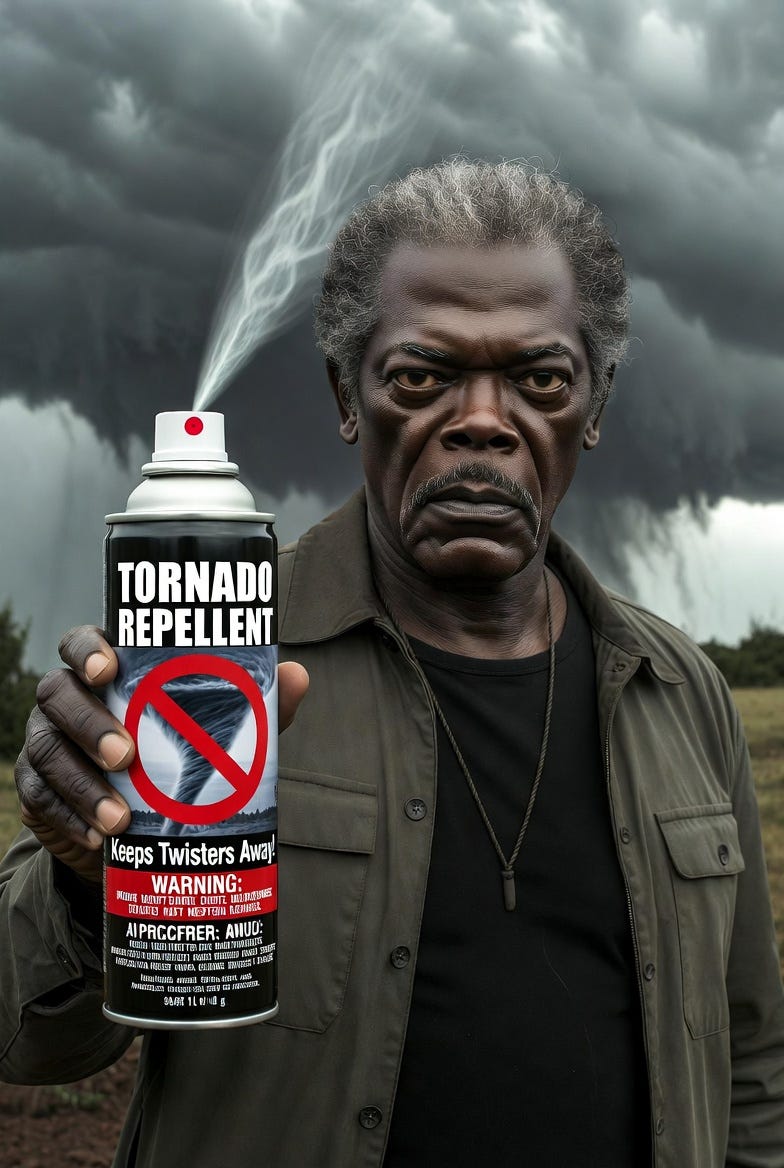
Courts are much less deferential to politicians when somebody uses their likeness for political speech.
It is absolutely protected to publish a cartoon of, say, Richard Nixon emerging from a sewer:
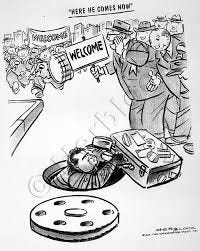
Even if Nixon thinks it’s an unfair character attack, his likeness can be used without his permission because it’s clearly a political opinion. Nobody literally thought Nixon slept in sewers. (Nixon didn’t sleep at all—he waited.)
Even so, it would be unlawful to use a politician’s likeness for purposes of outright fraud, defamation, or election interference.
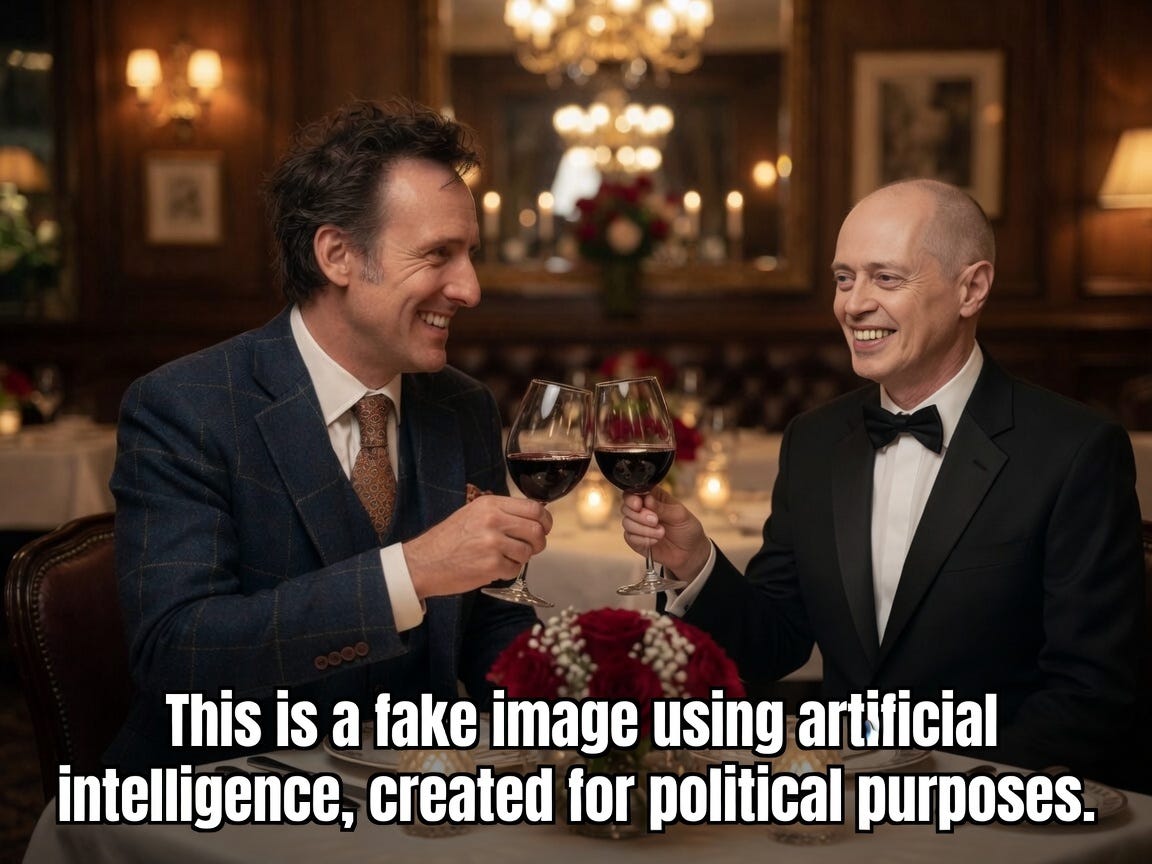
Showing a forged signature on an embarrassing check, a fabricated video of a candidate having an affair with Steve Buscemi, or an audio recording of a candidate appearing to drop out of the race and urging supporters to stay home and have an affair with Steve Buscemi are all uses of likeness beyond the bounds of protected political speech.
Herb Block could have theoretically drawn a cartoon of Richard Nixon slapping a reporter to symbolize Nixon’s hostility to the press, or the severity of his open-handed pimp slap. But had someone hired a Nixon impersonator to kick a puppy on camera, and submit that photo to The Pigsocket Tribune as a Nixon scandal, it would constitute defamation and not protected speech.
When unsure of whether an ad or cartoon is “exaggeration” for satirical effect or “bald-faced lying” by Washington sociopaths, courts tend to err on the side of free speech. Better to have maximum transparency and criticism with a smattering of libel than to aggressively police fraud at the expense of competitive elections.
For that reason, the recent ad “Thomas Massie Caught in a Throuple!” would likely stand up to constitutional muster:
For one thing, it clearly (if briefly) states “This satirical ad was created with artificial intelligence.” Additionally, the dude in half the video isn’t actually Thomas Massie, just “generic bearded white guy,” which is more or less like when campaigns of yore hired look-a-likes to mime someone. And finally, if Thomas Massie at some point scored a threeway with AOC, I would be proud of the guy and high-five him next time we run into each other.
Yes, there are probably some dumber old people who actually thought Massie got implicated in a cross-aisle polycule scandal, but if we use “could mislead old people” as the benchmark for illegality, we’d have to execute half of Washington.
The Talarico “Favorite Things” song is murkier. It’s mostly exaggeration and parody for satirical campaigning effect… but there’s no disclaimer. We do see "Paid for by Citizens for Sanity" at the bottom, which signals that it's campaign material. But that's a much weaker cue than an explicit AI disclaimer. As a result, it’s drifting towards fraud and defamation, or at least greater ambiguity than the Massie video.
Presumably, as AI videos mature, and political operatives become ever scummier, fake digital avatars of candidates will become more sophisticated at straddling legal ambiguity. Most people will infer, “Okay, yeah, probably some feckless former student council president used A.I. to shoehorn this junk into an expensive campaign strategy” but enough stupid people won’t, and “dimwits” is a large enough voting bloc to sway elections.
I see two ways to handle this.
The first is to pass laws which ban AI likeness in political advertisements. The idea here would be that even if someone’s likeness is constitutional when technologically simple, the act of scaling changes the nature of likeness when ratcheted up to levels of hellish Lovecraftian complexity.
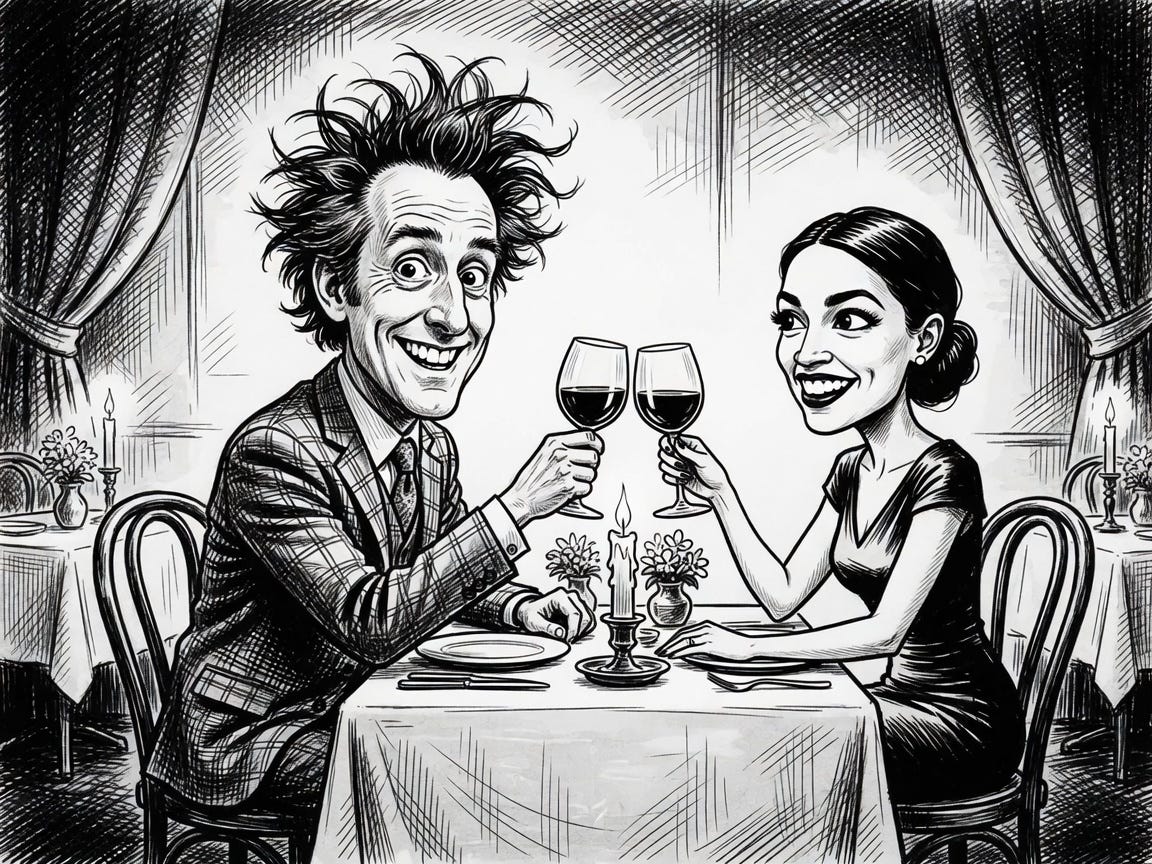
A political drawing is satire. A cartoon or puppet of a candidate, though more realistic, is still clearly satire:
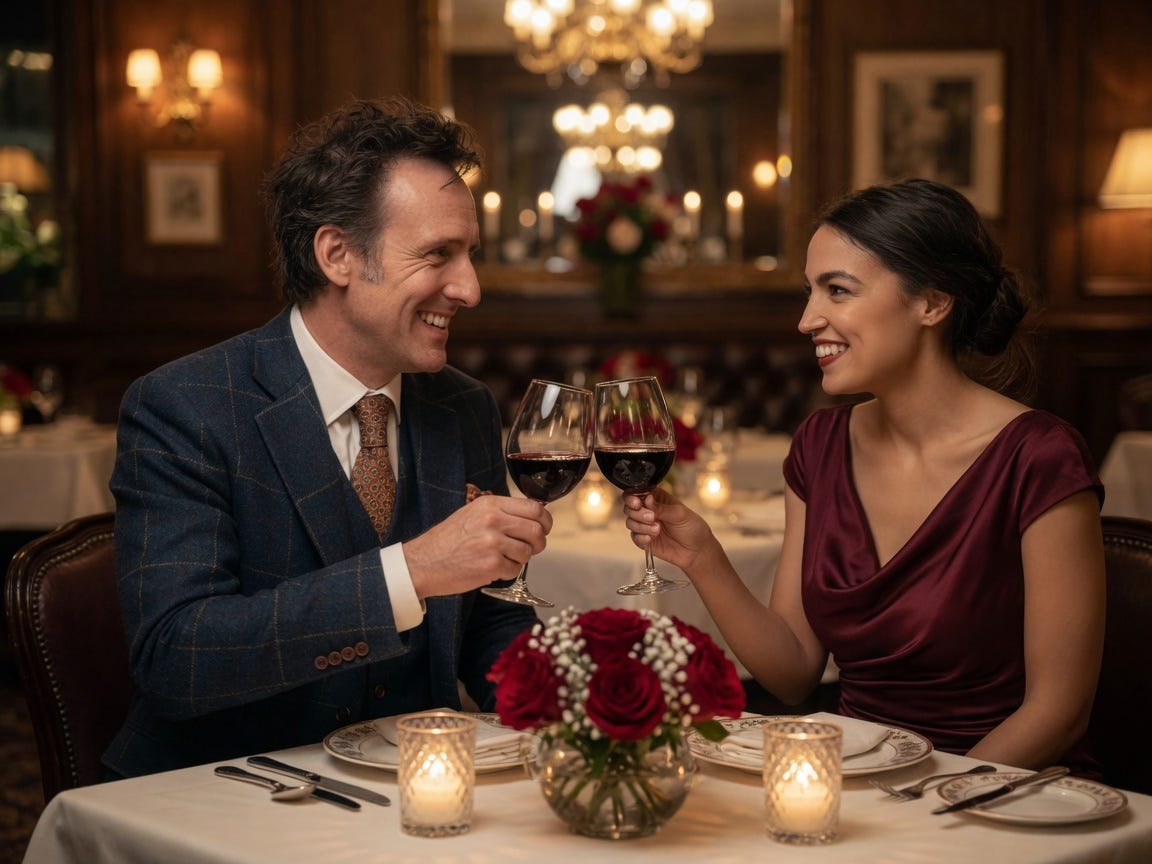
But once videography is indistinguishable from a real-world interview, it’s something different than mere pictographic representation:
While I’d enjoy seeing the Supreme Court flesh out that strain of thought, I doubt I’d wind up endorsing it. As much as I hate scumbag political operatives, and as much as I worry about their manipulating stupid hordes of voters, when confronted with ambiguity it’s still better to err on the side of political exaggeration over concerns of defamation or fraud. Courts generally place a very heavy thumb on the scale in favor of political speech, even at the risk that some deceptive or defamatory material about Steve Buscemi slips through.
Fortunately, we already have a template we can adapt to new AI campaign slop: disclaimers. FEC mandates are why politicians will proclaim “I’m Tad Bartlesnap and I approve this message,” which ought to be obvious, since they just said it. Or when some whackjob advertisement about how tea causes cancer is rapidly followed by a brief disclaimer of “Brought to you by the American Coffee Association.”
As A.I. gets used to make deefakes of candidates singing more and more shitty knockoff versions of The Sound of Music to confuse idiots and pensioners, we should require the lizard people squeezing them out to include large, legible text on screen reading “This is a fake image using artificial intelligence, created for political purposes.”
And while we’re at it, can the campaign operators at least make Ken Paxton ride a dinosaur?
This immediately made me think of the Nina Jankowicz "scandal" from 2022 when she was head of the (short-lived) Disinformation Governance Board of the United States Department of Homeland Security.
https://youtu.be/lNcEVYq2qUg?is=Ic7NMjrHQK3C6j6E
I have mixed feelings about this. Partially because I don't think it was particularly well done, but more importantly because it was coming from her in her capacity as a government employee.
If this had been part of a comedy routine in a club or on a late-night show, delivered by an actor or a comedian, I doubt I would have given it much thought.
I wonder how many voters have a vague recollection of this and will connect the AI ad to it in their minds.
quote: but if we use “could mislead old people” as the benchmark for illegality, we’d have to execute half of Washington.
Can we meet half way and just take away their voting rights?